Apparel Assembly
Balanced handling for woven shirts, workwear and mixed operation lines.
Start with fabric, seam class, daily changeovers and operator skill. We turn those production details into a machine shortlist that a local dealer can validate with your sample pieces.

Each path begins with a different material stack, feed requirement and finish standard.
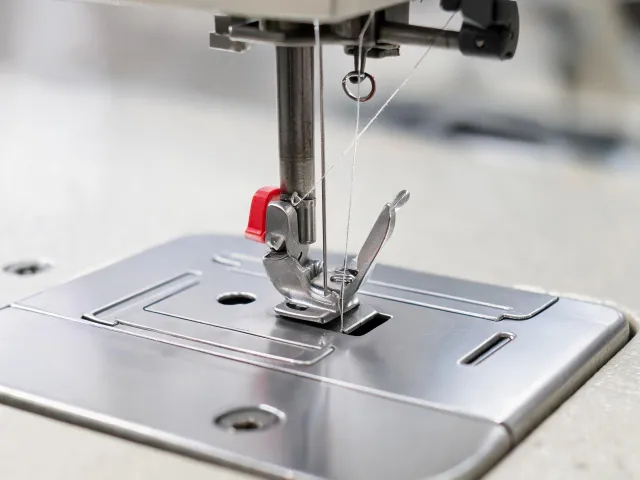
For teams weighing stitch consistency, automatic functions and operator pace across repeated assembly operations.
Explore the range →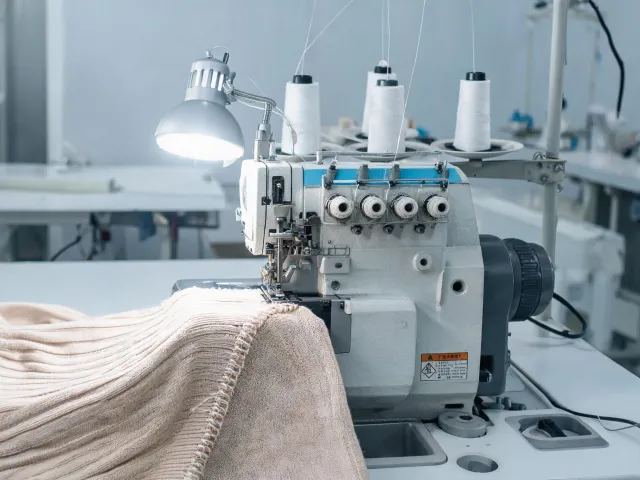
For production briefs centered on seam elasticity, trimming, differential feeding and clean edge formation.
See suitable machines →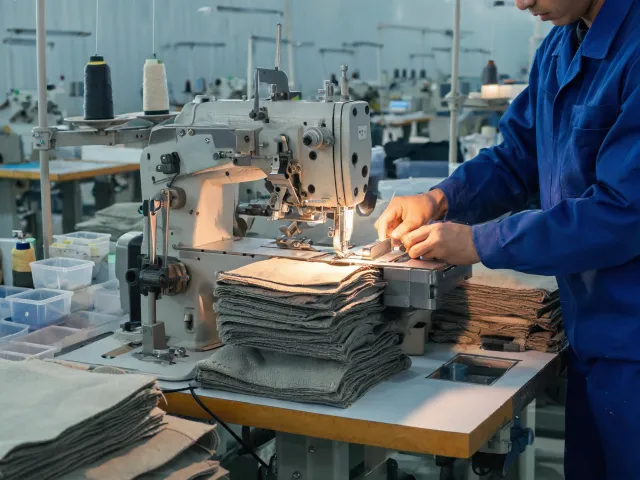
For buttoning, bartacking, pattern sewing or heavy transitions where the operation defines the machine architecture.
Describe your operation →These composite scenarios describe recurring evaluation questions; they are not customer endorsements or measured project results.
“Our operators move between poplin and denim details. Which feed and automation choices reduce adjustment work without hiding the settings we still need to control?”
“We need an overlock sample on our actual knit, with stretch recovery and seam appearance checked after handling—not a decision based on catalogue speed alone.”
“The machine must fit our attachments, table footprint and service routine. We want the dealer to verify those constraints before a purchase order is prepared.”
Bring the real ply count, seam allowance and reinforcement pieces.
Watch layer shift, start quality, corner handling and thickness transitions.
Record needle system, thread type, tension approach and stitch appearance.
Count manual trims, backtacks, lifts and handling moves in one cycle.
Confirm routine cleaning points, consumables, parts route and technician coverage.
Keep the exact model, options, attachments and test settings on the sign-off sheet.
Share the material, operation and expected shift pattern. A dealer can then prepare the right machine family and a reproducible sample test.